12:12, 14:10, and 16:8: What Do Fasting Windows Actually Mean?
By Brian Hupp ·
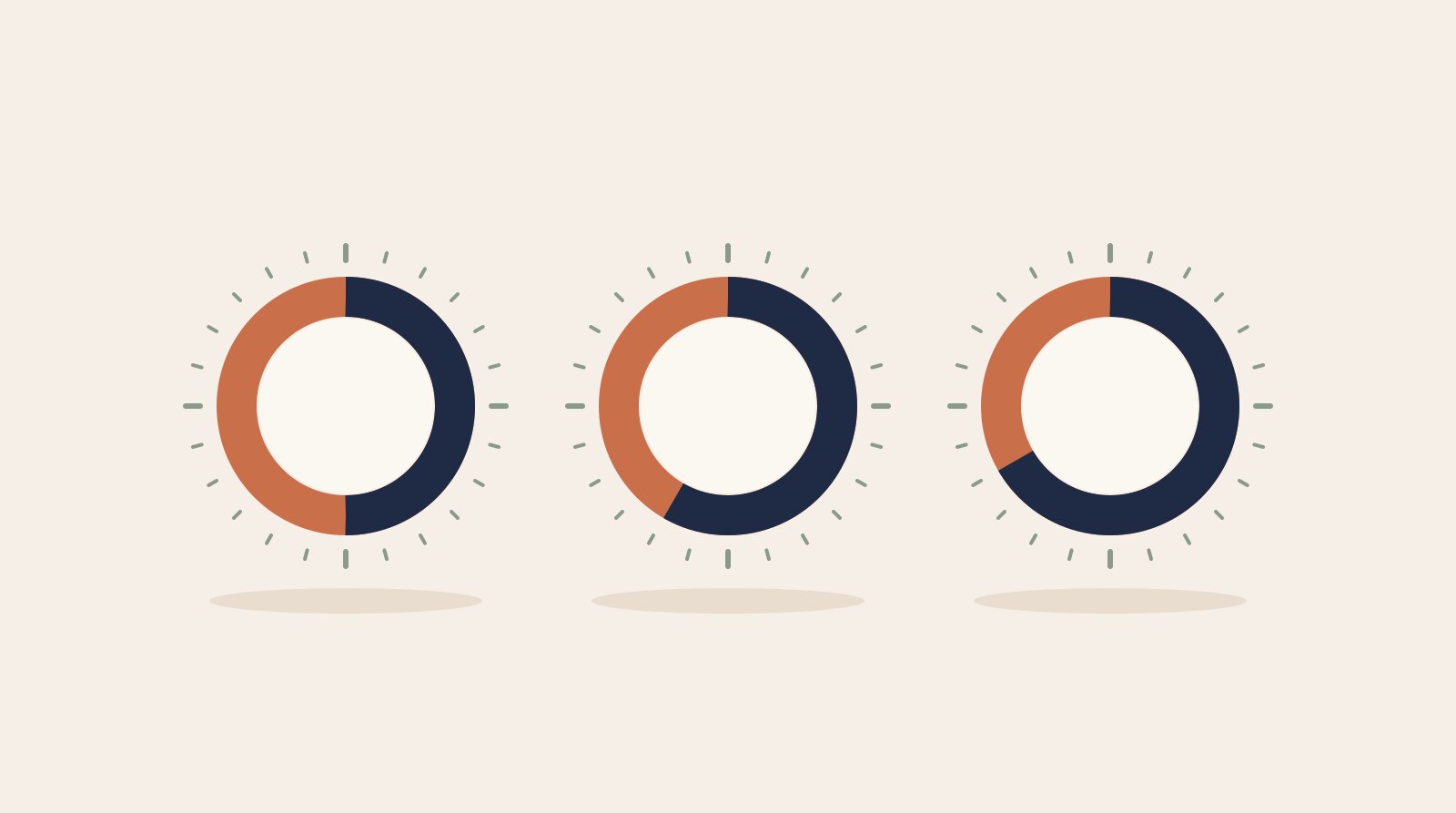
These numbers show up everywhere in fasting discussions: 12:12, 14:10, 16:8. They're just notation for hours in a day, not a difficulty rating.
- The first number is the fasting window: hours spent without eating.
- The second number is the eating window: hours during which meals happen. This covers food and any calorie-containing drinks, not an instruction to eat continuously through the whole window.
Both numbers add up to 24, since they describe one full day.
Illustrative Examples
These schedules are synthetic examples meant only to show the clock math. They are not recommended routines, and none of them require eating continuously through the whole window, just that all meals happen inside it.
12:12
First meal at 7:00 AM, last meal by 7:00 PM, fasting overnight until 7:00 AM. 12 eating hours + 12 fasting hours = 24.
14:10
First meal at 9:00 AM, last meal by 7:00 PM, fasting from 7:00 PM until 9:00 AM the next day. 10 eating hours + 14 fasting hours = 24.
16:8
First meal at noon, last meal by 8:00 PM, fasting from 8:00 PM until noon the next day. 8 eating hours + 16 fasting hours = 24.
What Research Says
Numbers like these describe timing, not a ranking of which is better or a personal safety assessment. A 12-month study led by Dr. Krista Varady found time-restricted eating produced weight loss similar to standard daily calorie restriction. Her own conclusion, from an interview with NIDDK: "I don't think intermittent fasting is better than anything else... just another option."
Dr. Courtney Peterson made a related point in NIH News in Health: when you eat matters, but what you eat probably matters more.
A Few Questions Worth Asking Yourself
Before picking a window, it can help to think through your own day: What time do you actually eat breakfast, if at all? Does your work schedule make a long evening fast realistic, or does it collide with family dinner? These are personal logistics, not a prescription, and the timing alone isn't a complete diet or a judgment of what's suitable for you.
Safety
Talk with a healthcare provider before changing your eating pattern, especially if you are pregnant, have a history of an eating disorder, or have diabetes. NIH News in Health states that anyone considering fasting should talk to their doctor first, and that people with certain health conditions or medications should not fast at all. For diabetes specifically, NIDDK's interview with Dr. Martin Grajower notes hypoglycemia as the main risk, with people on insulin or sulfonylureas needing a doctor's review before changing meal timing. Don't adjust medication dosages yourself; that's a clinician's call.
If You Want to Go Further
Hupp Goods has a free Fasting Readiness Quiz. It's educational, not a medical clearance. For more detail once you've talked with your doctor, the $9.99 guide Finding Your Window is available on Gumroad.
Get my free one-page fasting window cheat sheet: what the numbers mean and what breaks a fast. Confirm your email and the download opens. New fasting posts come by email after that. No spam.
About the author. Brian Hupp is a regular guy from Ohio who lost about 300 pounds with intermittent fasting after a rheumatoid arthritis diagnosis in late 2022. He is not a doctor or a nutritionist. Read his story: How I Lost 300 Pounds With Intermittent Fasting.